Recreate this look
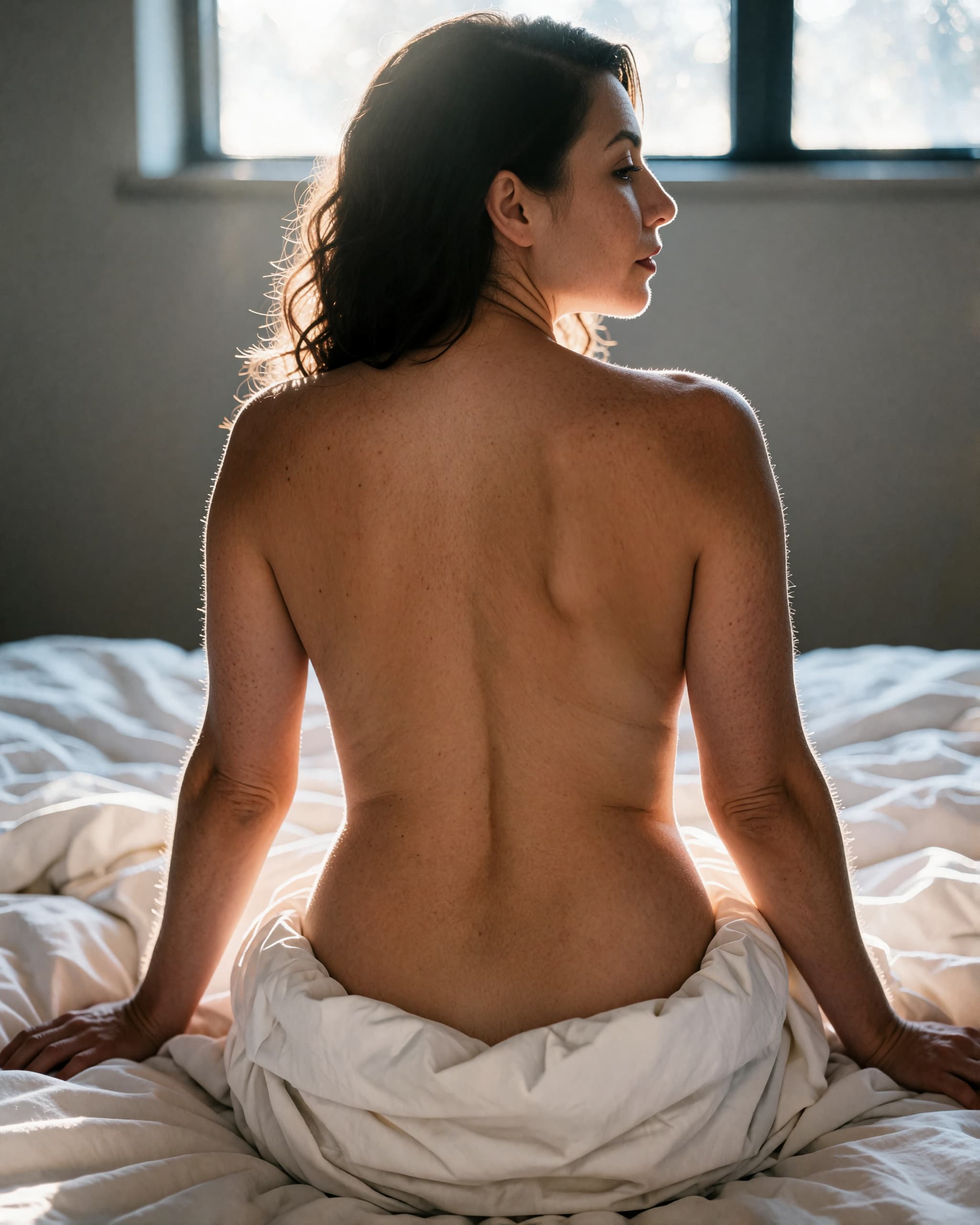
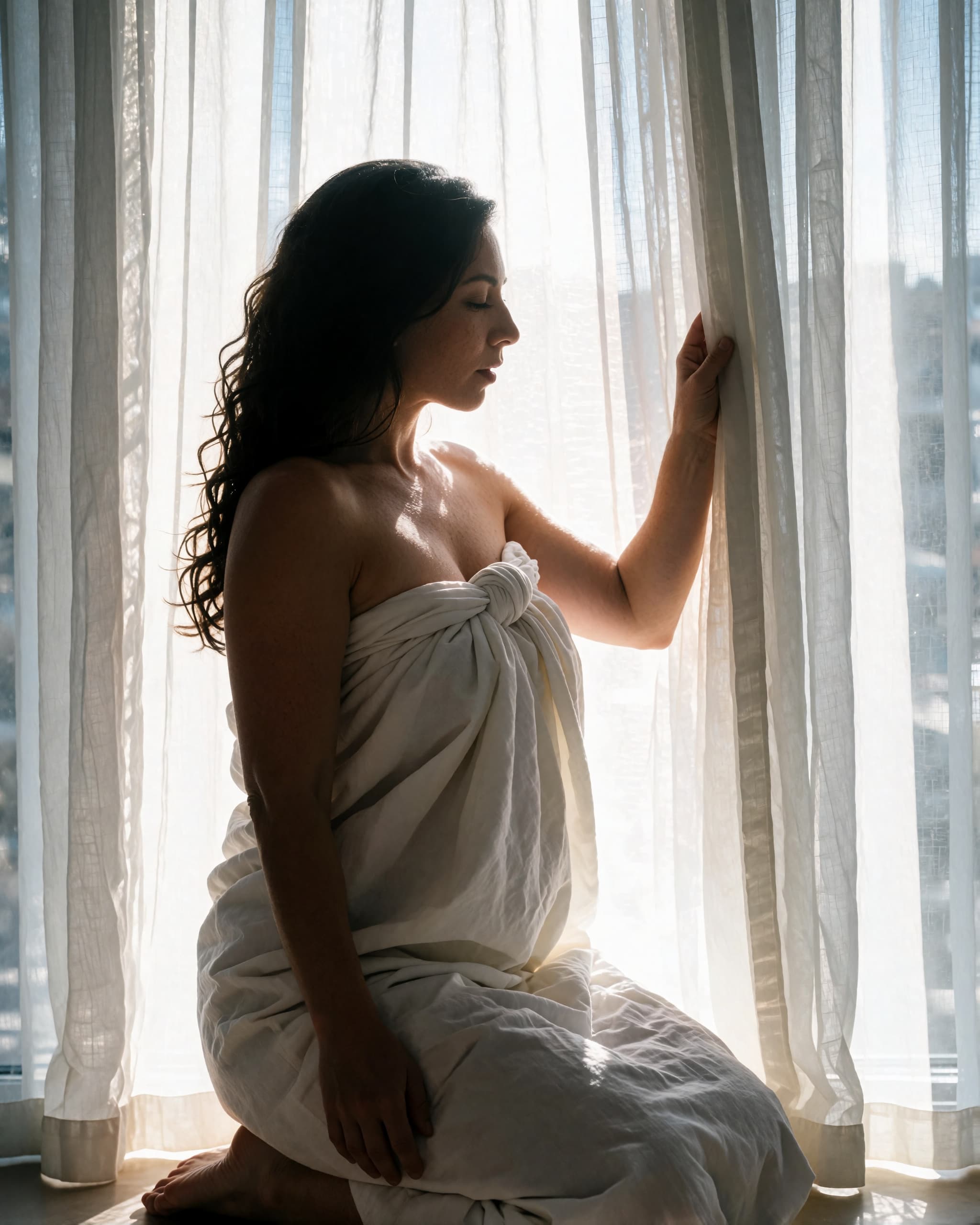
Shadow on the Spine
Lighting
- After dark, and the later the better — this one needs the room genuinely dark, so a winter evening is far easier than a light summer one. Nothing else about the timing matters.
- Cluster several tea-lights or candles just outside the edge of the frame, on one side of you. Cheap tea-lights give exactly this glow; nothing needs to be bought beyond a bag of them.
- Turn the overhead light off, and every other light with it. Candlelight only reads as candlelight when it is the only thing in the room.
- Keep the candles close to you — the light falls away very fast, and a candle across the room does nothing at all. Close enough to feel a little warmth is about right.
- Safety before anything else: candles well away from curtains, bedding and anything loose, the phone and the tripod on dry, steady footing, and nothing left burning when you leave the room.
- Set the exposure — how bright or dark the picture comes out — off a stand-in, not off yourself: you cannot tap your own body from behind the phone. Put a cushion or a folded coat where you will be, tap the screen on its candle-lit side, and let everything else fall into shadow rather than trying to rescue it. The shadow is the mood.
- This is the dimmest light in the library, so the phone will capture slowly. Settle, breathe shallowly, hold still, and take many more frames than you think you need — a few will come out beautifully sharp and those are the ones.
Camera
- Book about an hour of the room to yourself — twenty minutes to set up and get one test frame right, the rest to shoot. The light decides which hour of the day; knowing nobody is due back is what lets the rest of it be enjoyable. Stopping early is a finished session too.
- The photographs stay on your phone. Nothing here uploads anything and nothing is sent anywhere; nobody sees a frame unless you show it, and you can delete any or all of them at any point. That is what makes it safe to take far more than you need, which is what the rest of these steps ask you to do.
- What to wear is named by the look itself — a robe, a slip, a shirt, a set. Read it as a shape and a mood rather than a shopping list: your own version, something you already own and like the feel of, photographs better than anything bought new for the occasion. Soft, worn-in fabric drapes and moves when you move; stiff new fabric holds its creases and reads as a costume.
- What goes underneath, or does not, is yours to decide and nothing here needs to know it. If you are unsure, start more covered than you think you want — the robe closed, a shirt over the top — and open it up later, once you have seen a few frames you like. Taking a layer off part way through is easy; talking yourself back into one is not.
- Expect the first few minutes to feel ridiculous. They do for everybody, and the feeling lifts at about the point you stop watching yourself and start adjusting the frame. Shoot a run you fully intend to delete, delete it, and carry on — that run is the warm-up, not a waste of one.
- Put the phone on a tripod. A cheap phone tripod, a stack of books, or anything that holds it still will do — everything in these instructions assumes the phone is not in your hand.
- Set the self-timer to ten seconds — the setting that counts down after you press the button and then takes the picture on its own, so nothing is touched while you are in position. Look for a clock or a stopwatch symbol among the camera's options, and choose ten rather than three: ten is enough to get back, settle and take a breath, and three is not. A small remote does the same job with no countdown.
- Wipe the lens with a soft cloth before you start. It is the single commonest reason a whole run comes out hazy.
- Set the height to the middle of your body as you will be positioned in the frame — chest height if you are standing, and level with the middle of you if you are sitting or lying down. Keep the phone level rather than tilted down at you.
- Stand back two to three metres for a whole-body frame and closer for anything tighter. Backing off and letting the frame be wide is more flattering than getting close, on every phone.
- Before you look at yourself, look at what is behind you. Take one frame and read the back of it rather than the front — a laundry basket, a full clothes rail, a bright towel, a cable trailing across a corner. You will shoot ten frames you love and notice all of it afterwards, so two minutes of clearing is the cheapest improvement on this list.
- Your phone focuses on whatever you tap, and you cannot tap yourself from behind it: tap while standing at the phone and the focus lands on the far side of the room rather than on you. So give it a stand-in — a cushion, a folded coat or a pillow stood on end, exactly where you will be and at roughly the height of your face. The one you used to set the exposure will do.
- Tap the screen on the stand-in and hold your finger there until the camera says the focus is locked; most show a small badge or a padlock when it is, and locking is what stops the phone going hunting the moment you move. Then take the stand-in away, start the timer and get into position.
- Take one test frame, look at it properly, and fix the height, the framing and the focus before you shoot anything else. It wants to be sharp on you rather than on what is behind you. Two minutes here saves a whole run.
- Then shoot a run rather than a single frame, either way round: burst mode, where holding the picture button down gives you a stream of frames in a couple of seconds, or a repeating timer, where one countdown fires three or ten shots a few seconds apart. Find out which your camera offers while you are still setting up. Ten frames and a choice beats one frame and a hope.
- Turn the phone on its side, in landscape orientation. If the app offers a choice of aspect ratio — the shape of the frame, how tall it is against how wide — 4:3 is the wider, squarer one of the everyday options.
- Frame along the length of your body rather than across it. A landscape frame wants the long line of you running across it, and it is worth moving the tripod to get that line straight.
- Your face is deliberately not in this frame — turned away, dropped, or screened by hair. Check the test frame from a step back: a half-caught profile is obvious at a glance and easy to miss on a small screen while you are setting up.
Posing
- Lie face down on the bed with your body running along it rather than across it, so the whole line of you has room in the frame.
- Prop up onto both forearms and lift your chest clear of the bed. Everything in this family depends on that lift: lying flat goes shapeless, propped up lengthens the back.
- Slide your forearms far enough forward that your shoulders sit above your elbows rather than in front of them. That is what stops the shoulders creeping up around your ears.
- Draw your shoulder blades gently together and down your back. It softens the shoulder line, opens the chest and is the difference between a relaxed frame and a scrunched one.
- Stack your hands and rest your chin on the backs of them, or fold your forearms and rest your head on them. Either gives your face somewhere to be and your arms something to do.
- Arrange the sheet before you settle: drawn smoothly across the small of your back, gathered at the waist, or pulled up as far as you like. Smoothing a drape once you are lying on it is close to impossible.
- Cross your ankles behind you and lift your lower legs into the air. It is the most playful thing in this family and it stops the bottom half of the frame from going flat.
- Lengthen your neck forward and out of your shoulders rather than tipping your head back. Pressing the head back closes the throat; reaching it forward opens the whole line.
- Let your hair fall loose to one side, or forward across your face if you would rather it were not recognisable. Face down is a covered, low-pressure family, and how much of your face is in it is entirely your choice.
- Turn your face towards the camera, or away towards the light, and hold whichever you chose for the run.
- Breathe out as the picture is taken and let the smile land on the exhale. This family suits a genuine, easy smile better than a composed one.
- Come down onto the bed and rest your arms between runs. Propping on the forearms tires faster than it feels like it will, and tired arms show in the shoulders.
Coming with free accounts: saving this look to your favourites, dropping it straight into a shoot plan, and pose notes adjusted to your space and comfort level. Until then, the recipe above is the whole thing — print it, or keep it open on your phone. Grab the free checklist and we'll email you the moment accounts open.